
Introduction
"Marketing doesn't fail because businesses stop trying. It fails because execution becomes too hard to sustain."
Every marketer in a small or growing business reaches this realization eventually—usually not in a meeting, but late at night, staring at half-finished campaigns and unanswered notifications. The ideas are there. The intent is there. The customers are there. What's missing is alignment.
Because customers no longer behave predictably.
Some might read emails carefully, scrolling through product details and offers. Others glance at SMS within seconds and decide instantly. Some reply to WhatsApp messages as if they were personal conversations. And some ignore all of it, until the timing feels right.
This isn't inconsistency. It's modern behavior.
There is no single channel that works every time for every customer. And yet, many small business marketing stacks are still built as if there is. Tools force teams to commit to one channel at a time, one workflow at a time, one narrow view of engagement at a time.
What that looks like in practice is painfully familiar
You're told to:
- Use one tool for email marketing
- Another platform for SMS campaigns
- A separate dashboard for WhatsApp marketing
- And yet another system just to understand performance
What begins as an attempt at multi-channel marketing quickly turns into multi-tool chaos.
And suddenly, nothing connects.
- Logins multiply
- Templates live in silos
- Workflows don't talk to each other
- Reports tell partial, disconnected stories
And that's the real problem—not the channels themselves, but the fragmentation around them.
Because when execution is scattered, insight disappears. You're sending messages across platforms, but you can't see the full picture. You don't know which channel is pulling weight, which one is quietly failing, or how they work together. Marketing hasn't become harder because customers are complicated. It's become harder because the tools meant to help can't keep up with how customers actually behave. And when clarity disappears, confidence follows right behind it.
Multi-Channel Is No Longer Optional. It's a Behavioral Reality.
There was a time when marketers could reasonably ask:
"Which channel should we focus on?"
That question doesn't make sense anymore. Not because channels multiplied, but because human behavior changed.
Today's customers don't "prefer" one channel in a fixed way. They move fluidly between devices, apps, and contexts throughout the day:
- Morning emails are skimmed on laptops
- Afternoon SMS messages are read while standing in line
- WhatsApp notifications are answered between meetings
Attention shifts constantly, shaped by time, urgency, and mood.
The Data Confirms It
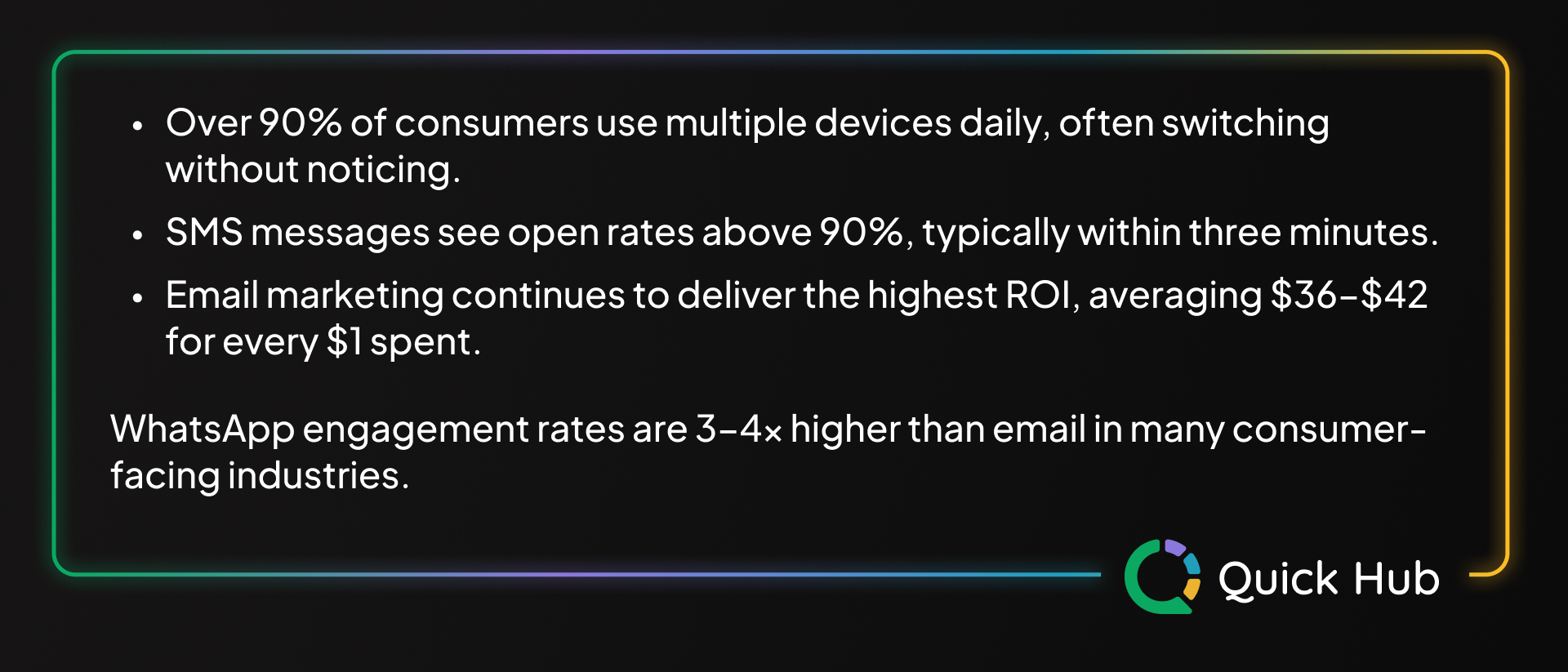
This fragmentation hits small and local businesses especially hard, particularly in markets like the US where consumers are saturated with options and messages. People don't consciously decide, "I only respond to email" or "I only check WhatsApp." They respond to whatever feels most convenient in that moment.
Different Industries, Different Channels
That's why different industries naturally lean into different channels:
- Restaurants and cafes thrive on SMS for time-sensitive, immediate offers
- Ecommerce brands depend on email for deeper product stories and promotions
- WhatsApp excels at reminders, alerts, and recovery moments where speed matters
None of these channels is "better" in isolation. Each plays a role at a different moment in the customer's day.
The Real Insight
Which leads to the real insight most teams miss: The challenge in modern marketing isn't picking the right channel. It's accepting that customers live across all of them, and expecting businesses to keep up. And once you accept that reality, the question changes entirely.
The Real Bottleneck Isn't Channels. It's Scattered Execution.
When people talk about "marketing problems" in small and mid-sized businesses, they often picture strategy gaps or lack of creativity. In reality, the bottleneck shows up much earlier, and way more quietly. It shows up in calendars, inboxes, and unfinished to-do lists.
What Small Businesses Actually Have
Most SMBs don't have a marketing operations manager. They don't have a lifecycle team mapping journeys and timelines. They don't have someone whose job description says campaign orchestration.
What they usually have is one of three things:
- A founder trying to keep growth moving
- A small marketing team stretched thin, working all day long, 24/7
- One person wearing five hats, marketing being just one of them
That person isn't lazy. They're overloaded.
The Execution Demand
Now imagine what execution actually demands. To run a single campaign properly, they're expected to handle:
- 3 different tools
- 3 different dashboards
- 3 different analytics views
- 3 different template systems
Each one asking for attention, context switching, and manual coordination.
THAT cognitive load matters.
Because when execution feels heavy, marketing quietly slows down:
- Campaigns get postponed
- Messages get simplified
- Follow-ups get skipped
Not because ideas run out, but because energy does. This is why campaign frequency drops in most small businesses. Teams plan ambitious calendars, but reality intervenes. Instead of weekly or bi-weekly communication, most SMBs end up sending one or two campaigns a month, even when they know they should be doing more.
The Real Gap
The gap between planned marketing and actual marketing isn't caused by lack of intent. It's caused by fragmented execution. When running a campaign feels like managing a project instead of performing a routine, consistency collapses. And when consistency collapses, growth follows.
The irony is that most SMBs don't need better ideas. They need marketing execution that fits the reality of how small teams actually work.
The Problem Is Efficiency, Not Creativity
Here's an uncomfortable truth most marketing platforms won't say out loud:
Talk to almost any small business owner or marketer, and you'll hear the same thing. They know what they want to communicate. They have offers ready. They have updates worth sharing. They even have a rough sense of when to send them.
Creativity isn't the bottleneck.
Execution is.
Ideas, unlike systems, have a shelf life. The longer it takes to act on them, the weaker they become. Momentum fades. Urgency disappears. What felt timely on Monday feels optional by Thursday. And that's where growth quietly leaks out—not because the idea was bad, but because it arrived too late.
This slowdown doesn't come from complexity. It comes from friction.
A Real Example: The Cafe Launch That Takes Too Long
Imagine you're a cafe owner planning a seasonal menu launch. On paper, the campaign seems simple:
- Let customers know about the new menu
- Create urgency with a limited-time offer
- Drive weekend foot traffic
Simple goal. Clear outcome. Easy, right?
But the moment you try to execute, reality hits. Suddenly, your straightforward plan splinters across multiple tools and platforms:
- An SMS message for quick alerts
- A WhatsApp message for loyal regulars
- An email campaign with visuals, menu details, and storytelling
Each message needs its own copy. Each platform demands different formatting. Scheduling must be done individually. Deliverability checks, last-minute edits, and system hiccups silently pile up.
What should take minutes now takes hours, or even days. Not because the campaign is complicated, but because the execution is scattered. And this is exactly where campaigns quietly die—not from lack of ideas, but from delays. The intent is there, but the energy to act fades.
The Solution
This is where QuickHub's Quick Campaign feature changes everything. By centralizing SMS, email, and WhatsApp into one intuitive dashboard, QuickHub allows you to:
- Draft and schedule all messages from a single interface
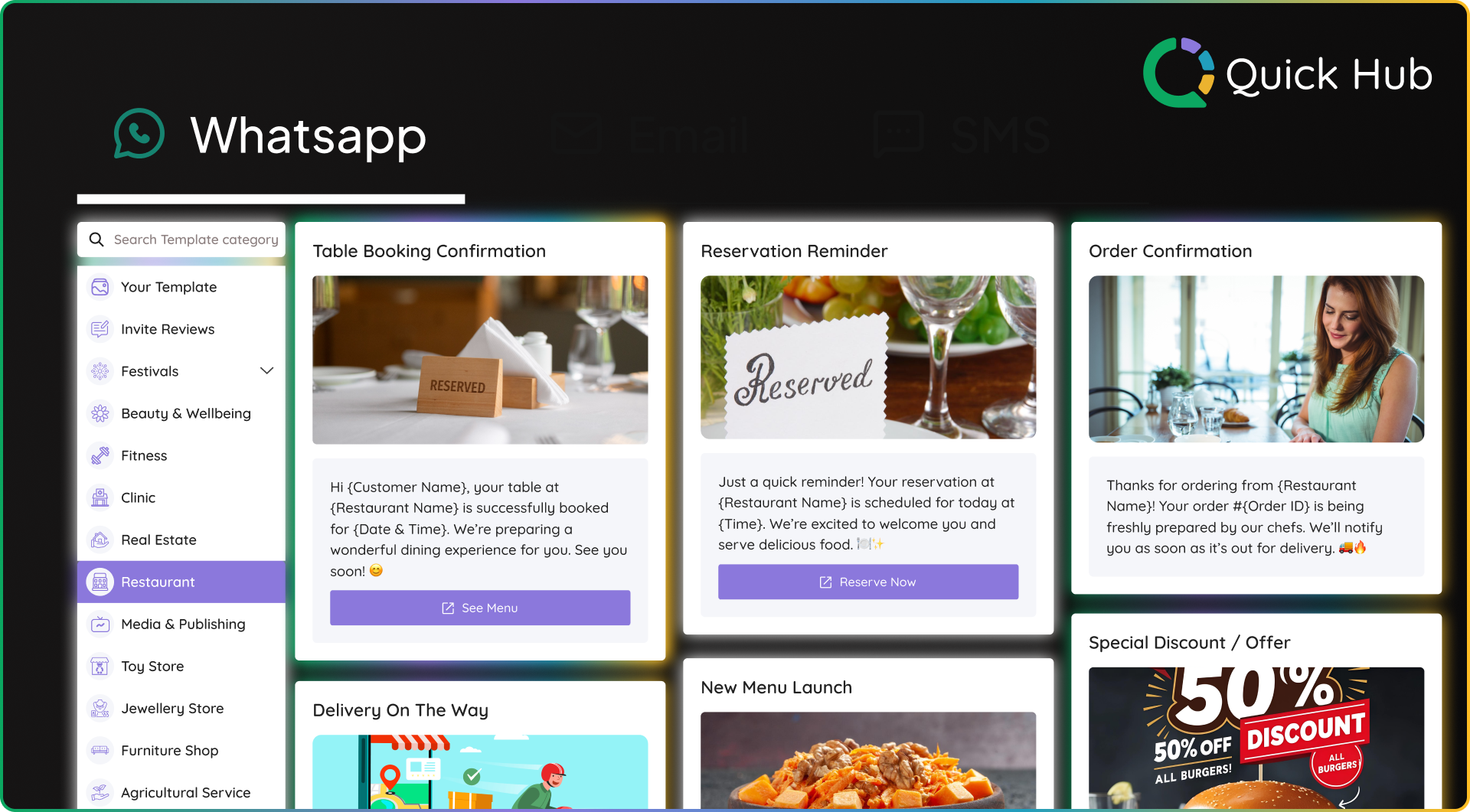
- Use 100+ pre-designed templates for speed without sacrificing quality
- Track deliverability, engagement, and analytics across channels in one view
Instead of handling 3 different platforms, Quick Campaign turns a fragmented, time-consuming task into a smooth, repeatable workflow. Marketing no longer feels like a burden; it becomes an engine for growth, letting small businesses run sophisticated campaigns with the speed and intelligence of big brands.
With QuickHub, that seasonal menu announcement doesn't get stuck in "draft limbo." It reaches customers efficiently, on the right channel, at the right time, with all the impact you envisioned.
Scattered Tools Silently Kill Campaign Frequency
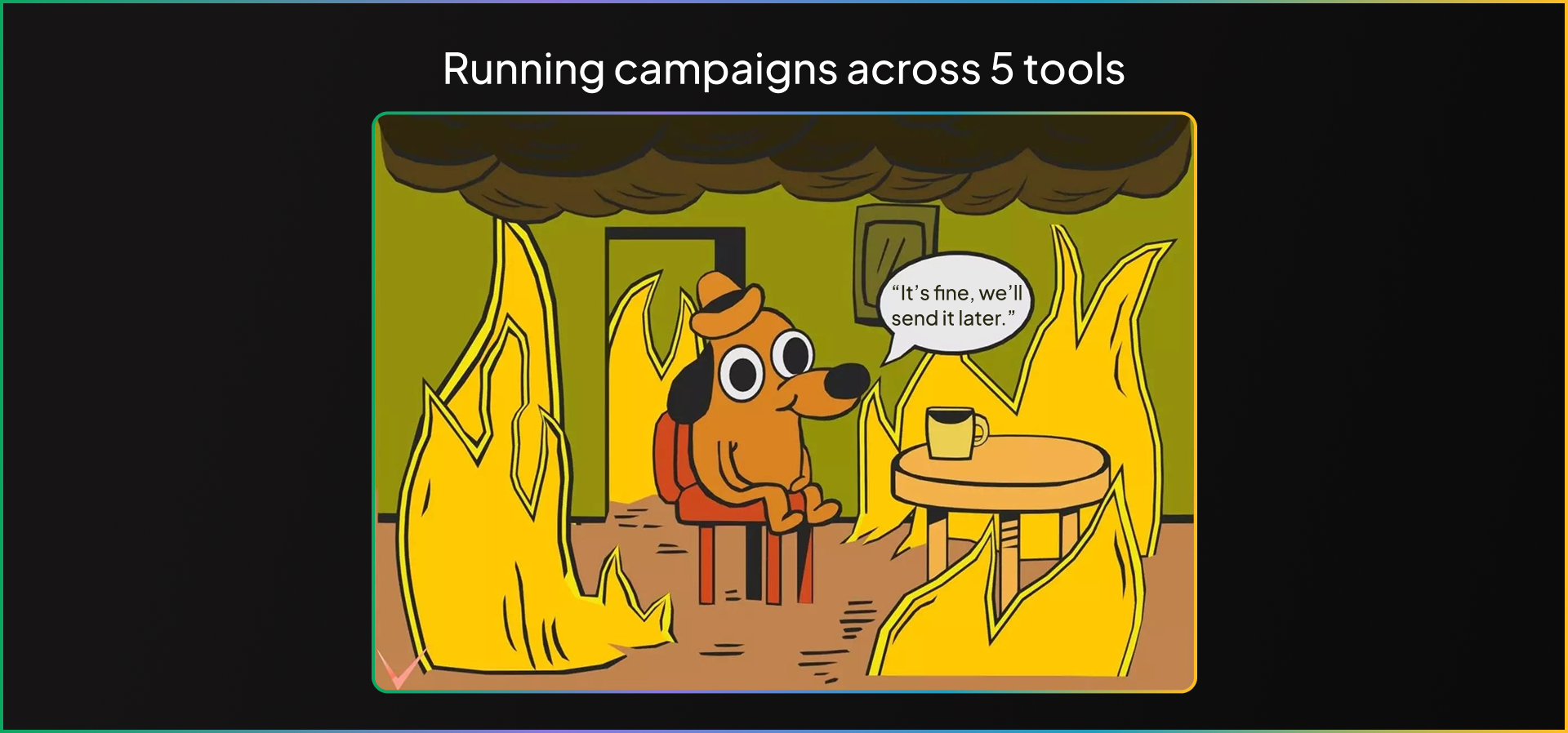
Nobody wakes up one day and says, "I don't believe in marketing anymore." What actually happens is far subtler.
- "We'll send it later."
- "Let's do it next week."
- "We'll batch campaigns someday."
Each delay feels small. Each friction point seems minor. But cumulatively, momentum vanishes. Scattered tools don't fail loudly, they fail quietly, in the background. Every extra login, every platform switch, every duplicated workflow reduces campaign frequency, limits experimentation, and turns marketing from a habit into a project.
And as any growth marketer will tell you: habits, not heroic pushes, drive consistent growth.
The Real Shift
The real shift isn't about sending more campaigns, it's about centralizing execution. Modern marketing teams are learning a simple truth: campaigns succeed when they are easy to execute, visible, and trackable across channels.
Imagine this scenario:
- All channels—SMS, email, WhatsApp—live in one place
- Every campaign appears in a unified timeline
- Analytics for every channel are visible in a single dashboard
Suddenly, marketing stops feeling heavy. Campaigns no longer feel like launches; they become daily operational actions, part of a predictable growth system rather than a sporadic effort.
Multi-Channel Campaigns Are the New Default
Example Use Case #1: Restaurants & Cafes
Consider a US-based cafe running weekend brunch promotions. With QuickHub's Quick Campaign feature, they can:
- Send an SMS Friday evening to drive Saturday footfall
- Trigger a WhatsApp reminder Saturday morning for last-table availability
- Send an email Sunday morning with next week's menu and booking link
3 channels. 3 intents. 1 streamlined workflow.
The magic happens because:
- Everything is planned once
- Executed from one centralized platform
- Tracked together in real time
This is how chains like Sweetgreen or Bluestone Lane operate. And now, thanks to QuickHub, small independent cafes can achieve the same level of multi-channel sophistication, without hiring agencies or building large marketing teams. Campaigns become repeatable, measurable, and scalable.
Example Use Case #2: Retail & Ecommerce
Ecommerce brands rarely convert on first touch. That's why high-performing Shopify merchants stack channels intentionally:
- Email marketing for product storytelling and launches
- SMS campaigns for flash sales and urgency
- WhatsApp marketing for new arrivals and cart recovery
According to ecommerce benchmarks:
- Brands using multi-channel campaigns see up to 30–40% higher conversion rates
- SMS + email combined outperform single-channel campaigns significantly
The growth doesn't come from more content. It comes from better distribution.
The Baseline
Cross-channel communication isn't a "growth hack" anymore. It's the baseline for modern marketing success. Customers are fragmented, attention spans are short, and relying on a single channel is no longer enough. One email, one SMS, or one WhatsApp message can't capture the modern consumer's journey.
Modern marketing demands 3 things:
- Stacked presence across multiple channels
- Consistent messaging that reinforces your brand at every touchpoint
- Centralized execution that reduces operational friction
Without these, campaigns quickly lose momentum. Most SMB tools were designed for single-channel execution, leaving businesses to handle multiple dashboards, templates, and analytics.
The result? Campaigns take longer to launch, insights remain scattered, and growth slows.
Where QuickHub Fits In
This is exactly the operational gap QuickHub's Quick Campaign feature was built to solve. Instead of forcing small teams to manage email, SMS, and WhatsApp separately, QuickHub centralizes everything in one intuitive dashboard.
The result is clear: no context switching, no fragmented reporting, and campaigns that actually get sent consistently.
From a single interface, businesses can:
- Launch multi-channel marketing campaigns in minutes
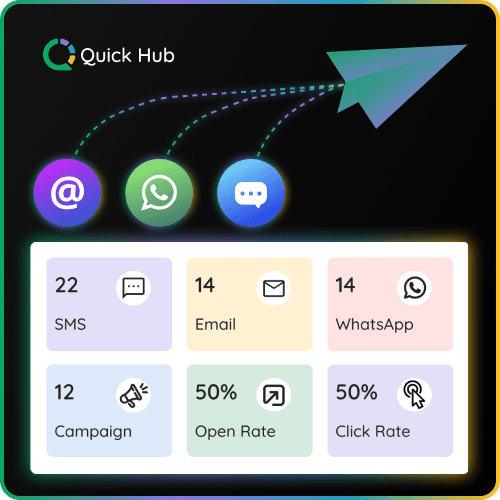
- Track open rates, click rates, and send counts side by side
- View active, scheduled, and draft campaigns in one unified timeline
- Monitor SMS, email, and WhatsApp usage together without toggling between platforms
The Difference
Imagine the difference: instead of spending hours logging in and out of three tools, formatting messages separately, and piecing together analytics, your marketing team can execute smooth, repeatable workflows. Campaigns stop being isolated projects and become part of a daily growth engine.
In short, QuickHub doesn't just simplify marketing, it transforms it. SMBs can now run big-brand campaigns with small-team efficiency, reaching customers wherever they are, with consistent messaging, actionable analytics, and operational ease. Multi-channel marketing is no longer optional; it's a system built for predictable, scalable growth.
The Template Advantage: Where Speed Actually Comes From
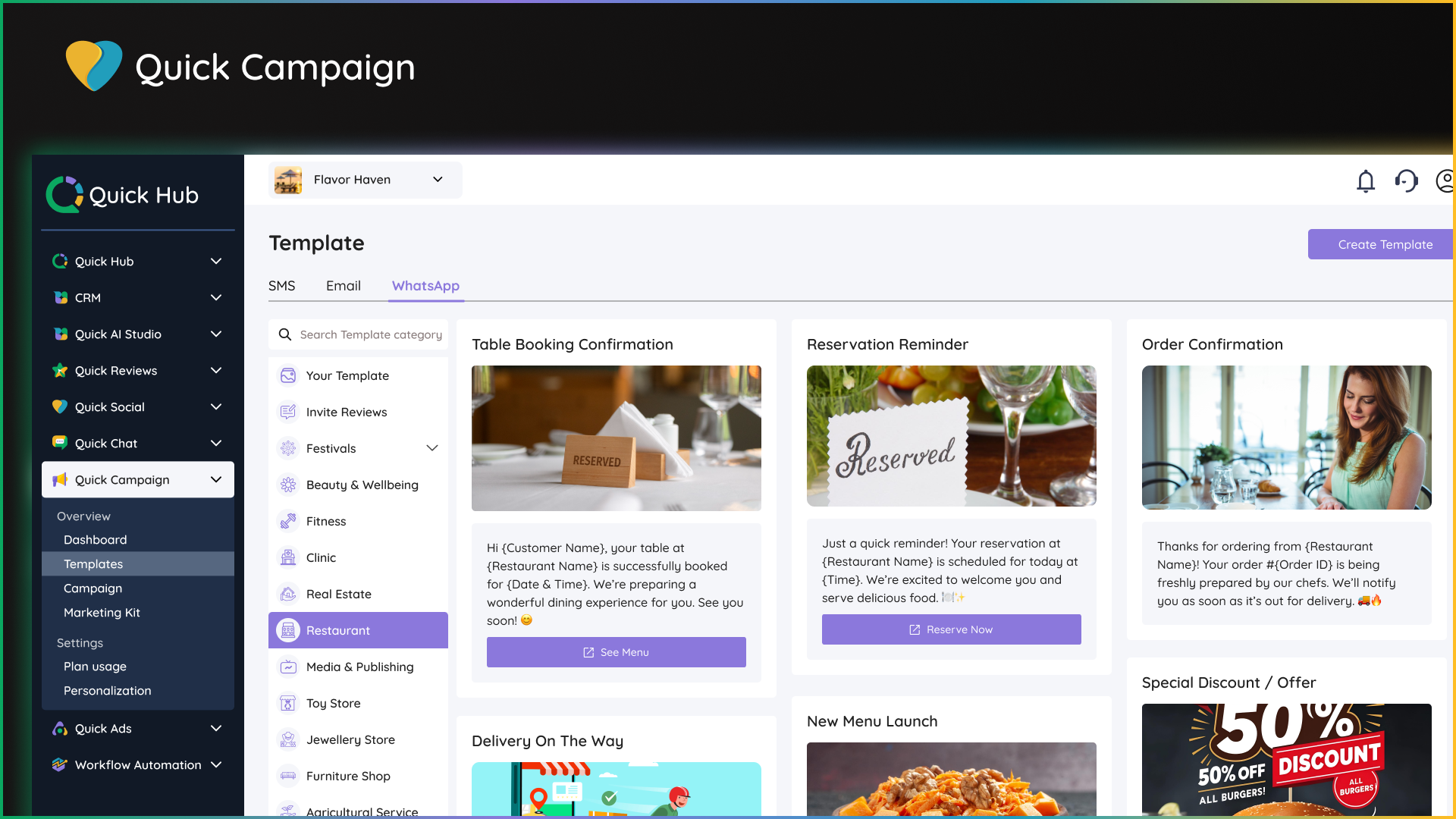
One of the biggest execution blockers for SMBs is copywriting time. QuickHub solves this with 100+ ready-made campaign templates, categorized by industry.
Templates are available for:
- Restaurants & cafes
- Retail & ecommerce
- Personal services
- Interior design
- NGOs
- Finance
- Marketing agencies
- Manufacturing & industrial businesses
- And many more
Instead of spending hours writing, select a template, personalize it, and send across channels. This is how small teams run advanced campaigns weekly, without a dedicated marketing headcount.
More Than Sending Messages
Quick Campaign doesn't just help businesses send messages. It simplifies:
- Cross-channel communication
- Campaign planning
- Execution speed
- Performance visibility
So startups, SMBs, and local businesses can operate with big-brand intelligence, but with small-team speed. And that's ultimately what modern marketing demands.
Final Thought: Execution Drives Growth
Here's the reality every small business eventually discovers: strategy alone doesn't drive growth, execution does. You can have brilliant ideas, perfect messaging, and creative campaigns, but if sending, tracking, and optimizing them is a burden, momentum quietly dies.
What Actually Drives Growth
When campaigns are easy to execute, they happen more often. Frequency, consistency, and visibility—that's where growth actually comes from. Modern marketing doesn't reward good intentions; it rewards repeatable, well-orchestrated action across multiple channels.
This is exactly why QuickHub is a game-changer. By centralizing operations in a single platform, it removes the friction that silently kills campaigns. Businesses can now leverage its 8 powerful features to execute like enterprise-level teams without the complexity:
- Quick CRM – Manage customer relationships and segment audiences efficiently
- Quick Reviews – Capture, showcase, and track customer feedback for trust and engagement
- Quick Social – Schedule, publish, and analyze social media campaigns in one place
- Quick Chat – Engage customers instantly through live chat across platforms
- Quick Campaigns – Run multi-channel marketing with SMS, email, and WhatsApp from a single dashboard
- Quick Ads – Design, launch, and track ad campaigns with unified analytics
- Quick Agents – Automate customer responses and support with AI-driven agents
- Workflow Automation – Create repeatable, automated sequences to save time and increase efficiency
With these tools, campaigns stop being one-off projects. They become daily operational habits, where insights from Quick CRM feed into Quick Campaigns, Quick Social, and Quick Ads, while Quick Agents and Workflow Automation ensure nothing slips through the cracks.
The Bottom Line
At the end of the day, growth isn't about sending more messages. It's about sending the right message, at the right time, on the right channel, consistently.
QuickHub turns marketing from effort into action, and action into predictable, scalable growth.